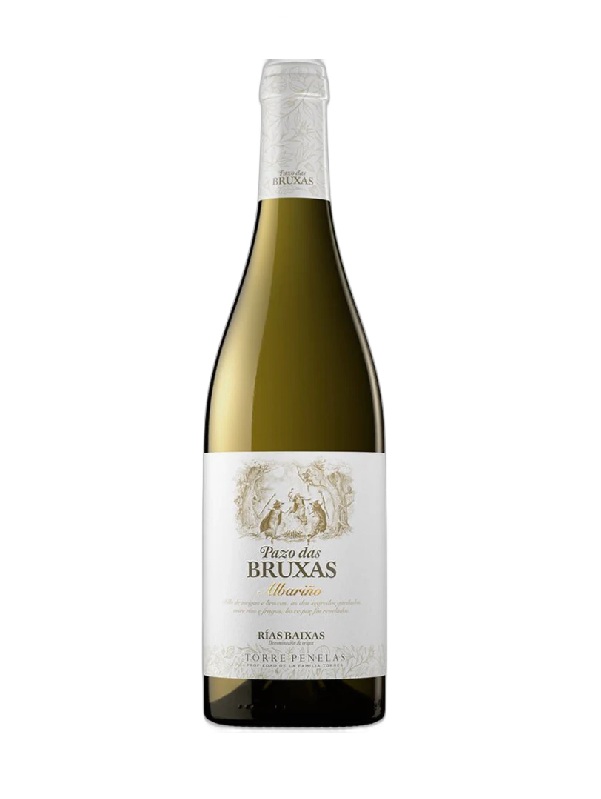
Pazo Das Bruxas pays homage to the folklore and landscape of Galicia. It tells the tale of the Galician witches said to have gathered in the woods, which surrounded some pazos or manor houses, to conjure up spirits with their dances and spells. Nourished by their energy, the sap or lifeblood then coursed through the vines, in the same way the Albariño grapes give life to this wine today.
GRAPE VARIETY: Albariño
TASTING NOTES
Straw colour with golden highlights. Seductive on the nose, with very fine notes of white flowers and a delicious fruity background (pineapple, apple, lemon). On the palate it is delicate, smooth, silky, yet withpersonality.
SERVING SUGGESTIONS
Excellent aperitif. It will perfectly accompany mild white fish and natural, boiled or grilled seafood, as well as sushi and vegetables. Fresh goat cheeses will harmonise with the vibrant freshness of this wine. Serve between 8 and 10 ºC
Origin
In 2012, the fifth generation of Familia Torres launched a winegrowing project in Rías Baixas and made its first Albariño with the name of Pazo das Bruxas. This wine is made from grapes grown primarily in the subzone of the Valle de Salnés.
DO Rías Baixas
DO Rías Baixas is a small winemaking region in Galicia, northwest Spain and is shaped by its small-scale farming tradition. More specifically, it is located in the province of Pontevedra and a small area of A Coruña and is divided into five subzones: Val do Salnés, O Rosal, Ribeira do Ulla, Condado do Tea, and Soutomaior. One of the DO’s determining factors is its commitment to indigenous varieties, particularly Albariño, which resists the region’s characteristic adverse climate conditions to produce wines with authentic quality and sense of place marked by their distinctive Atlantic character.
The Sal in Salnés
The name “Salnés” comes from the salt flats that once covered the area (in Spanish and Galician, sal = salt). During the Middle Ages, the valley’s inhabitants collected salt and used it to preserve the fish that left their ports on merchant ships. The Latin name for the region was Territorium Saliniense, or “land of salt”, which gradually became Salnés in Galician.
Salt has always been an important part of the Val do Salnés, and nowadays we associate it with its expression in the wines. Whether it’s the power of suggestion or some enological miracle, wines made from grapes grown in the Salnés Valley usually present more salinity on the nose and palate than wines from the other subzones. Their proximity to the cool breezes of the ocean also lends them the electric acidity that has made Albariño world-famous, with tart green apple and fresh citrus aromas.